OMADA HEALTHConverting sign up momentum to ongoing engagement
Context
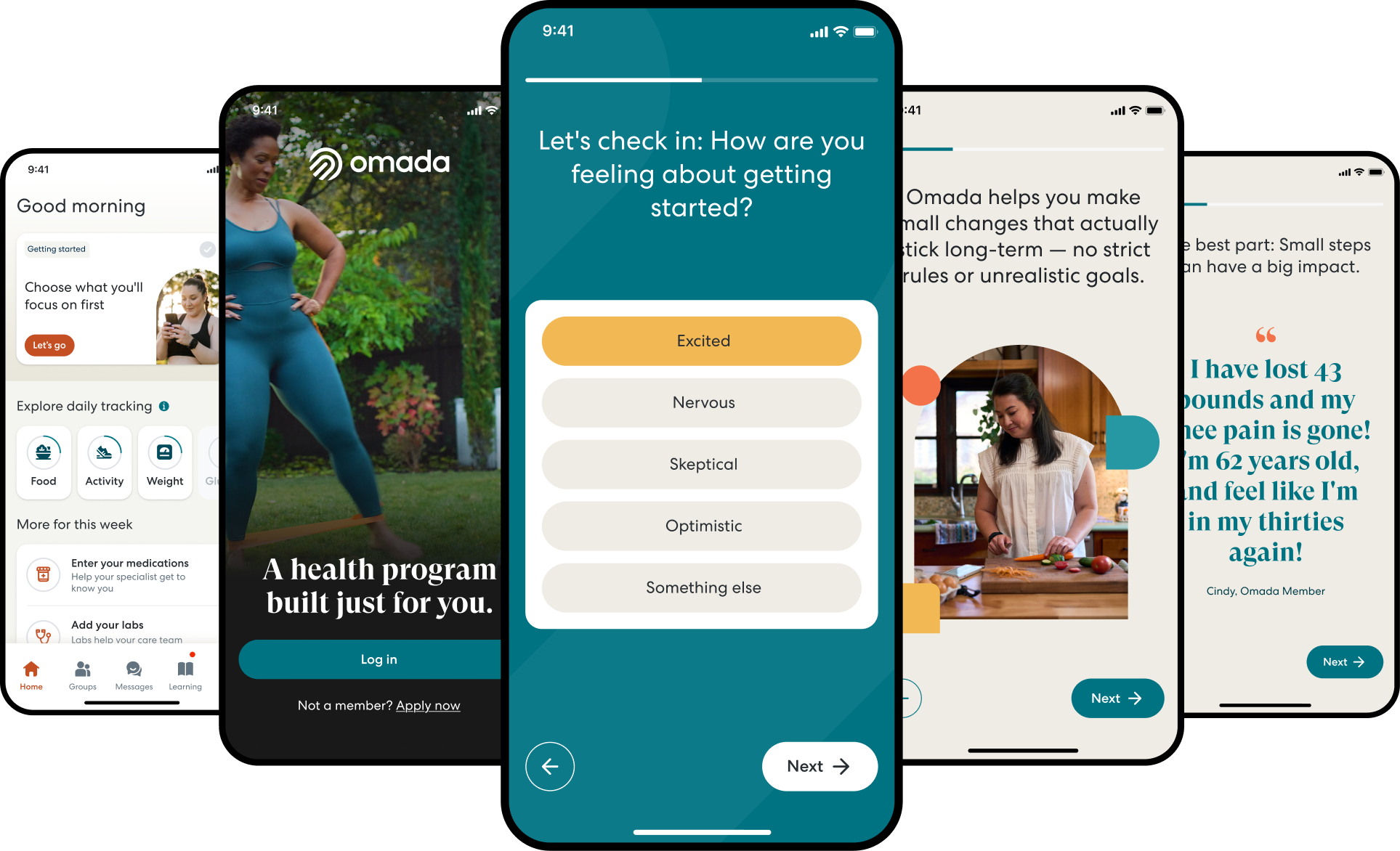
Omada provides virtual in-between visit care for their members to improve health, prevent obesity, and help people manage chronic conditions. The program consists of 1:1 coaching, lessons, activity and food tracking, goal setting, and connected devices to help monitor metrics like weight and blood glucose levels.
Over the course of 3 months I redesigned the MDP (minimum desirable product) onboarding experience and laid the groundwork for ongoing experiments and iterations.
Results:
↑ Increased week 1 logins and engagement, with more members choosing their first set of lessons
↑ Increased month 1 member-coach rapport
↑ Increased reporting rate for baseline metabolic health metrics
Scope: UX design, UI design
Role: Design lead from feature definition and scoping through visual design execution
Users: Omada health members just getting started
Our first impression was flat, with no give and all take.
Where we started
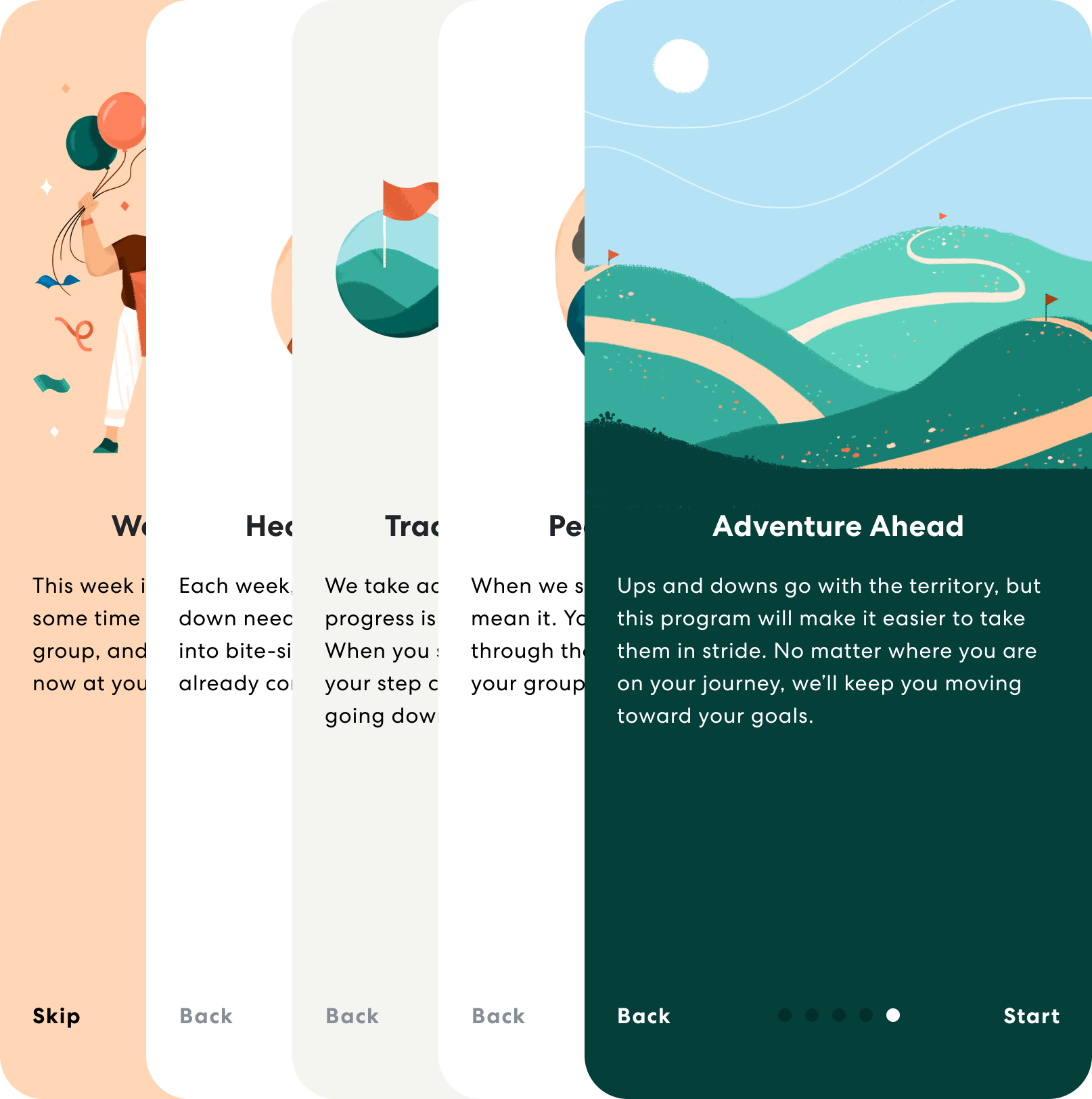
In the previous experience every new member started with the same static 5-screen carousel, regardless of their condition, interests, and experience.
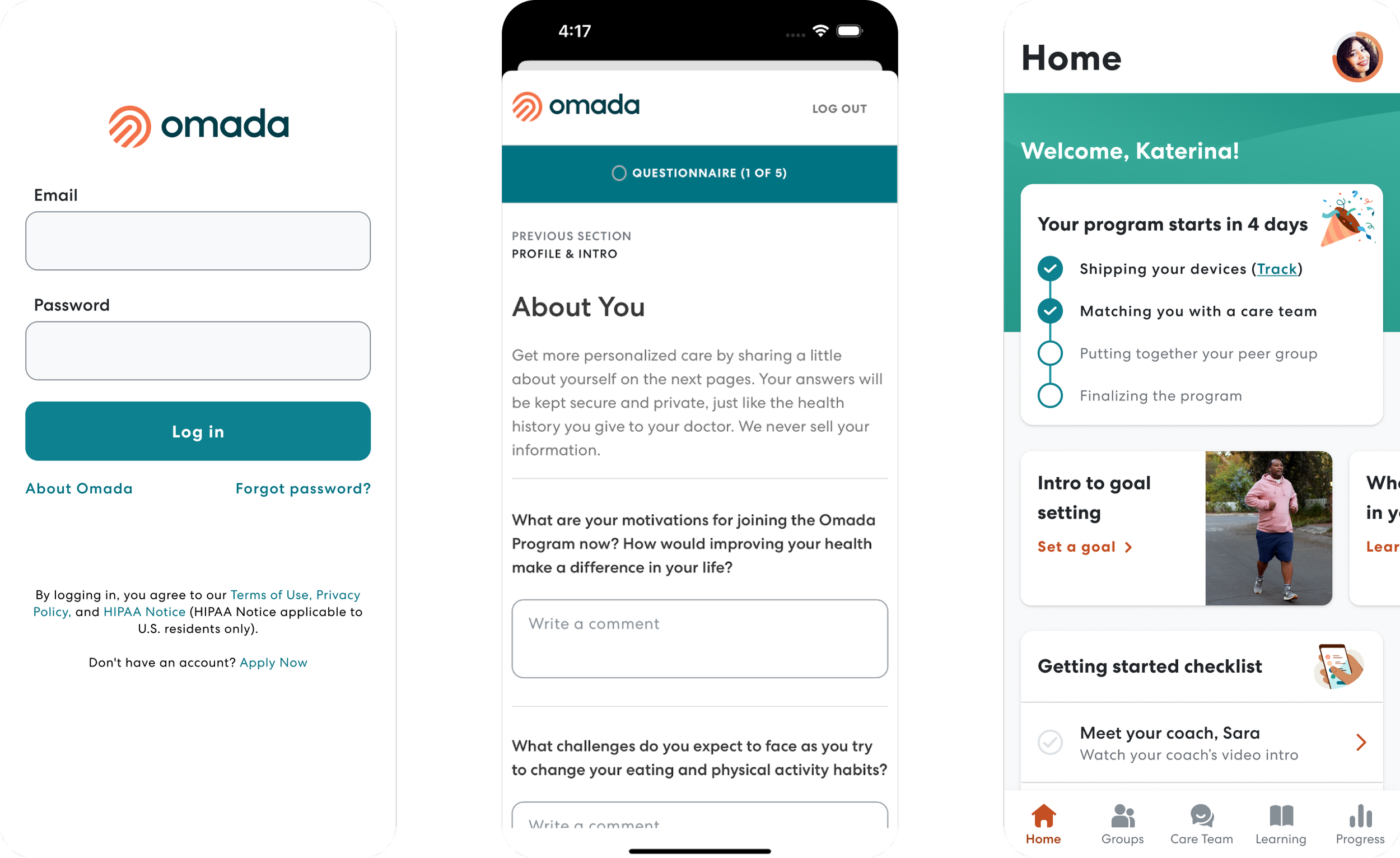
The log in screen was functional but without energy or personality. Once logged in, new members completed a lengthy questionnaire before landing in a “waiting room” experience until they were matched with a coach.
Approximately 7-10 days later, members matched with a coach and entered the full program experience.
HMW capitalize on early momentum and keep members engaged longer?
Goals
The project goals were to increase logins and engagement in the beginning of the program while having no negative impact on the member-coach relationship or clinical metrics. Our hypothesis was that the first time login flow and onboarding experience is a pivotal moment for building emotional affinity with the brand; if we made it more delightful, interactive, and informative, our members would have more reason to return. However, programatic constraints meant we couldn’t yet get rid of the 7-10 day program start delay, so we needed to right-size this investment knowing we’d want a bigger change in the future.
The approach
Get more people in by simplifying the enrollment process
Provide value and guidance while members waited for their program to officially start
Improve the experience by setting expectations and adding moments of delight at thoughtfully chosen points
Design and build with flexibility in mind so we could evolve the experience in the future
Research and problem definition
I started by digging into our trove of existing member research to establish a shared understanding of the needs, strengths, and mindsets of our largest member segments. In parallel, I brainstormed the story we were trying to tell with a cross functional team -- what makes Omada different, how it works, the benefits, etc. The combined outputs of these exercises shaped the strategy for the new onboarding experience and anchored our messaging on elements of the Omada program that would be most compelling for our target segments.
Key member needs
Quick wins to build confidence and momentum
Help breaking goals into smaller pieces
Reason to believe they'll make progress this time
High support until they gain confidence
Program highlights that respond to member needs
Experimenting with small changes
Outcomes and social proof
Personal health coaching
Structure and wireframing
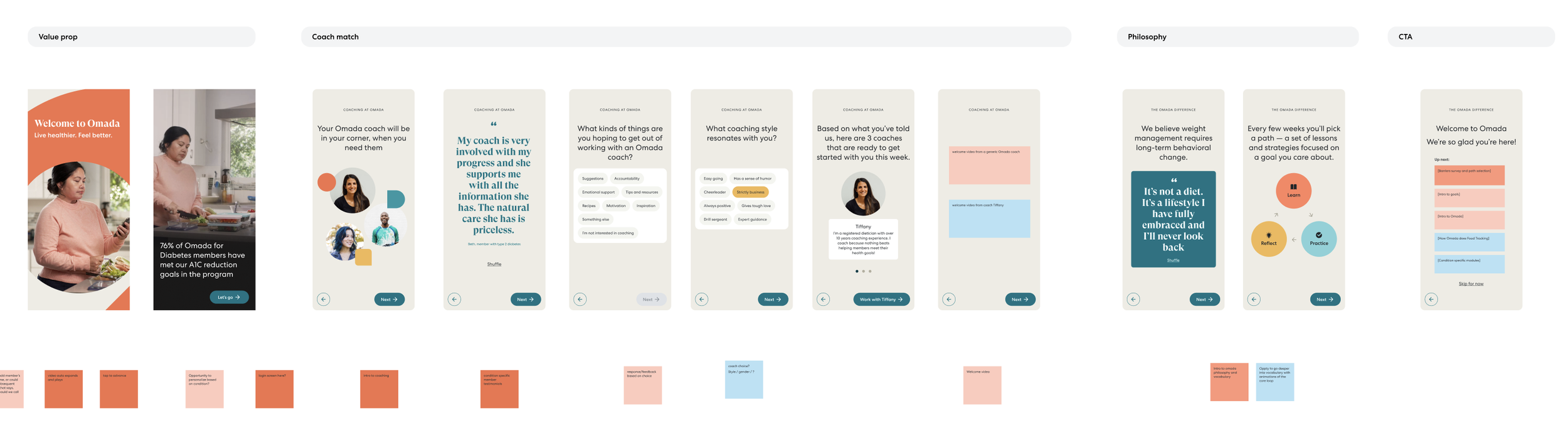
I sketched out a new onboarding flow to highlight our key program elements, first with post-its then quickly transitioned to rough wire frames based on design system and existing components we could re-use. I established 4 main page types to balance simplicity and ease with enough friction and movement to keep people engaged with the content: static, personalized, animated, and interactive.
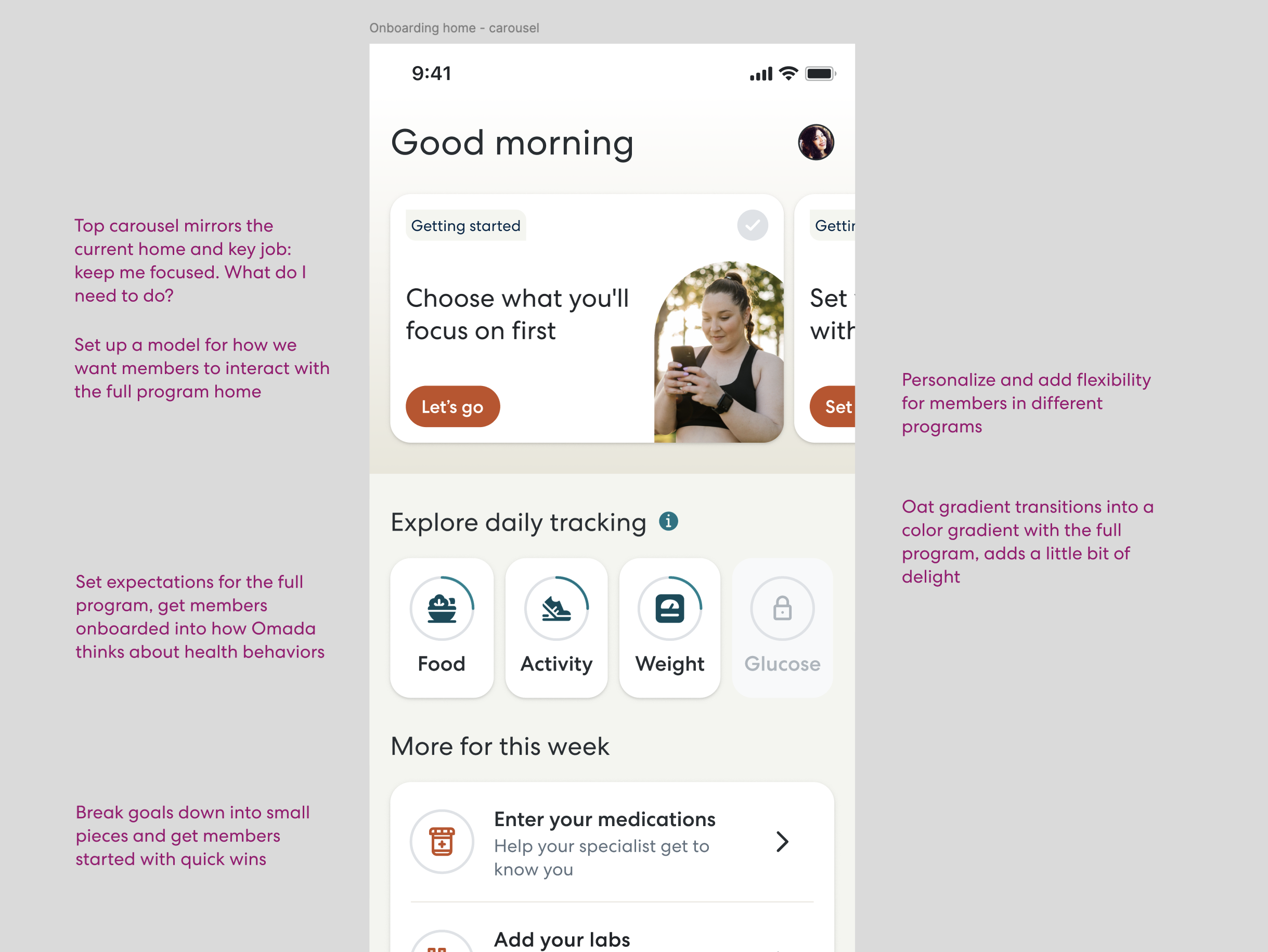
I also wanted to ease the awkwardness of the transition from the “waiting room” to the full program. To do this I redesigned the waiting room page to match the look and structure of the program home screen. This helps set expectations and trains users on what to expect when the program beings in full.
Design details
Just enough context
Simplification was a big focus of the detail design phase. Many members come into Omada with no idea of what to expect — there was so much we could say. This was in tension with the fact that many of our members come in already overwhelmed by life burdens. We needed to minimize cognitive load and limit how much content we presented in a single communication.
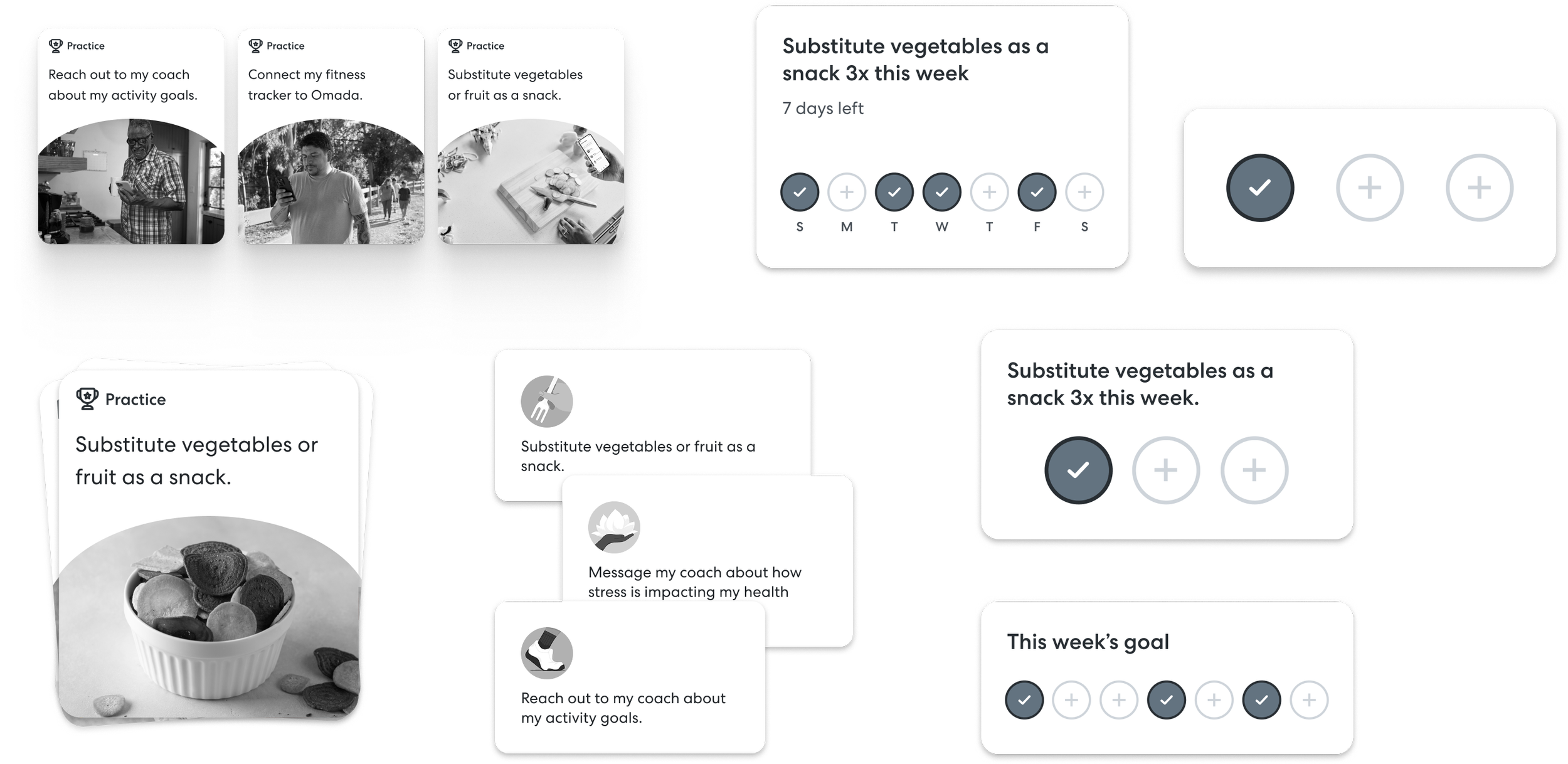
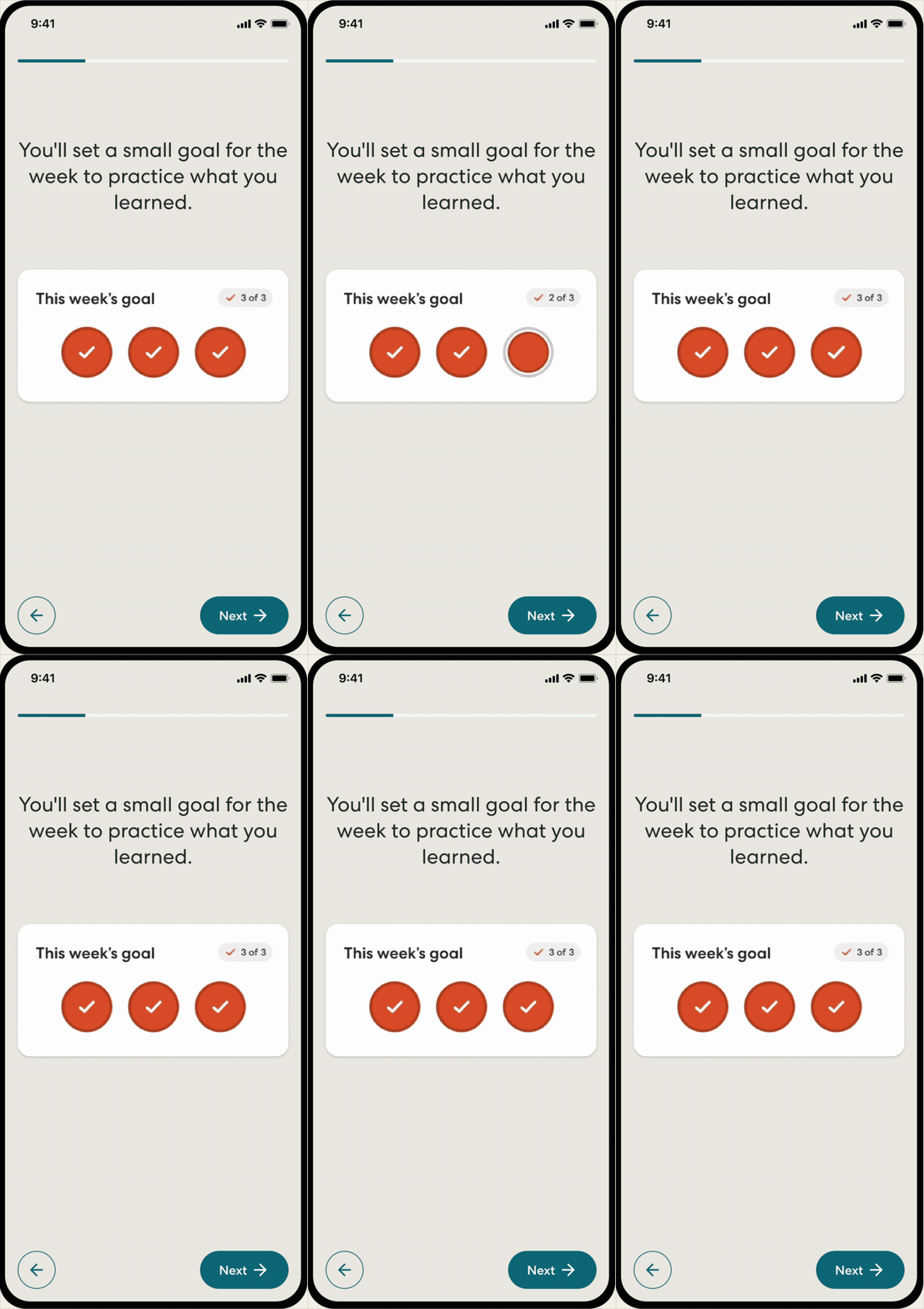
In this example we wanted to communicate that members can use Omada to set and track against their goals. We also wanted to communicate that goal setting at Omada was all about starting with small habits, not tackling everything at once. We explored several options, gathered feedback from stakeholders, and landed on a design that stripped the visuals down to the details that mattered most for the story: use the app to track a small goal of your choice.
Just enough friction
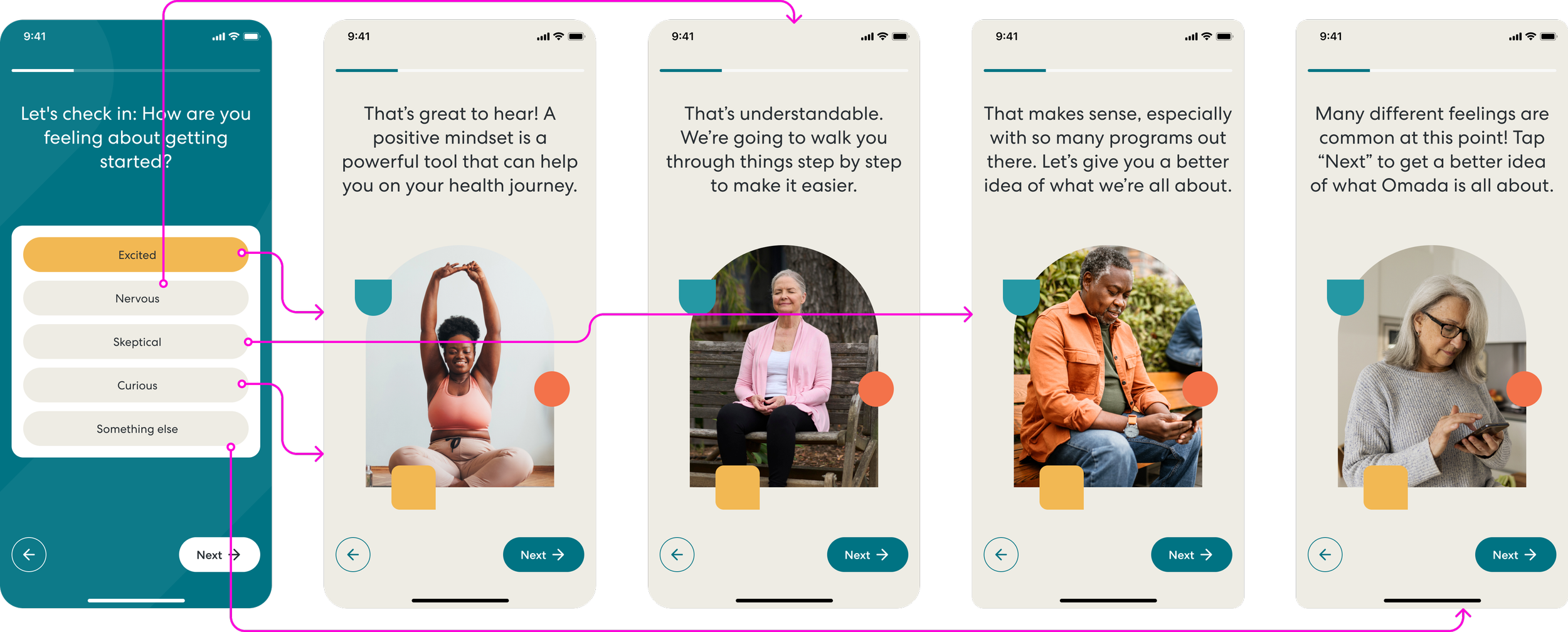
Another focus of the detail design phase was to intersperse some friction in the form of interactive questions. Not only do these screens slow members down and create interactive learning moments, they also provide our care team with valuable insights into the member’s starting point and readiness to change.
We also took this opportunity to incorporate elements of personalization and move away from the previous on-size-fits-all approach. We used branching logic to help create a personalized flow that stayed aligned with a member’s emotional state and desired time investment.
Results
The onboarding experience was rolled out to all new members in June 2025. Though we did not see a significant impact on login rates beyond week 1, we did see significant increases in early engagement. More members selected a learning path (vs being auto assigned one) and more members chose to enter their baseline health information (A1C test results and current medications). We also saw an increase in high quality interactions between members and their health coaches.
↑ 7.1% increase in week 1 logins
↑ 1.7% increase in high quality member to coach messages
↑ 5.2% increase in baseline A1C capture rate
☺ Convey the value and experience of working with an Omada coach
☺ Give members small wins while they wait for the program to start
☺ Reinforce that Omada meets members where they are